By now you've probably read some version of the advice: forget goals, focus on systems. Don't set out to write a book, just write 500 words a day. Don't aim to lose weight, just build better habits. There's real truth in it, and it's helped a lot of people stop white-knuckling their way toward a deadline.
But it's half the picture. Followed literally, "just build systems" leaves a gap that quietly sinks people — they build a tidy daily routine, feel productive for months, and then look up one day and realize the routine wasn't actually taking them anywhere. Let me give the idea its full due, and then show you the part that's missing.
What's a Goal? What's a System?
A goal is the what — the outcome you want. A system is the how — the repeatable process you run to get there.
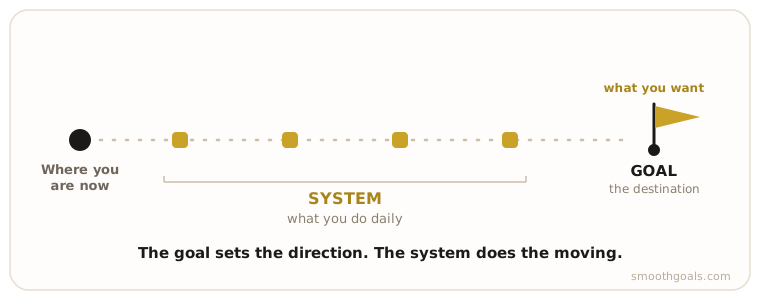
You want to lose ten kilos: that's the goal. What you eat and how you move, day after day, is the system. You want to write a book: that's the goal. The five hundred words you put down, day after day, until it's done — that's the system. The goal sets the direction. The system does the moving. They're not rivals — they're two halves of the same thing, and almost every argument about "goals versus systems" comes from forgetting that.
The Case for Systems (and It's a Good One)
Here's why the systems idea caught on, and why it deserves to. A goal is a single moment in the future — cross the line, hit the number, done. A system is what you actually do with your days, and your days are where your life happens. If you only ever focus on the distant outcome, the daily work feels like a tax you pay until you arrive, and that's exhausting.
The reframe is genuinely useful: you don't rise to the level of your goals, you fall to the level of your process. Set the bar wherever you like — what you'll actually achieve is decided by what you repeat. That insight has pulled a lot of people off the painful cycle of chasing a deadline, missing it, and starting over. If that's the part of the advice you've taken to heart, good. Keep it. Just don't stop there.
Where "Just Focus on Systems" Falls Short
Two gaps, and they're the reason smart people with good routines still stall.
A system with no goal is a treadmill
There's a moment in Alice in Wonderland where Alice asks the Cheshire Cat which way she ought to go. That depends on where you want to get to, he tells her. She says she doesn't much care — and he replies that then it doesn't much matter which way she walks. That's a system with no goal. You can run the most disciplined daily process in the world, but if you haven't decided where it's taking you, you're just walking. Busy, consistent, and going nowhere in particular.
The goal is the destination; the system is how you travel. Drop either one and you don't move. This is exactly why "forget goals, just build systems" misleads people: they build the routine, feel the satisfaction of being consistent, and a year later notice the routine was never pointed at anything that mattered to them.
A perfect system still fails if part of you is fighting it
This is the deeper gap, and the popular advice almost never touches it. You can design a flawless system — the right daily actions, the right schedule — and still not run it. Not because the system is wrong, but because some part of you is quietly pulling the other way.
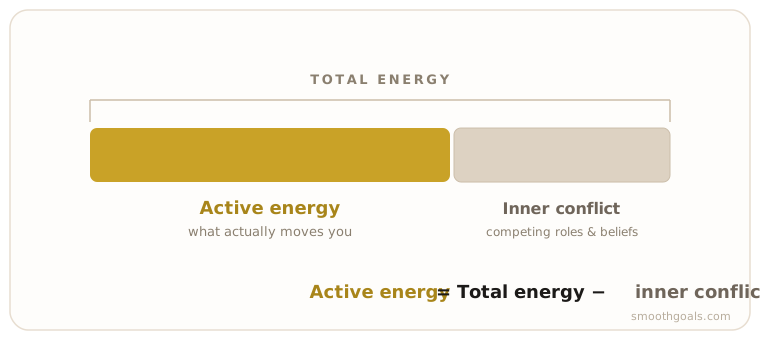
I see it constantly. Someone builds a perfectly sensible plan to grow their income and then mysteriously doesn't make the calls, doesn't send the proposal, finds something else to do. The system isn't broken. There's a hidden conflict underneath it — a role that wants something else, or an old belief that says people like them don't get to have that. There's a simple way I think about the drain it causes: your active energy is your total energy minus whatever you're spending on inner conflict. A great system can't help you if you're burning your fuel fighting yourself.
"Build a better system" is good advice that assumes you'll run the system you build. Often the real work is clearing what's stopping you — which is why a complete method has to deal with the inner blocks, not just the routine. (I go into that in the limiting beliefs that hold you back, and the everyday version of this is what makes it so hard to stick to your goals even when you know exactly what to do.)
How Smooth Goals Uses Both
So the answer to "goals or systems" is: neither, on its own. You hold both, plus a third thing nobody mentions.
A complete approach starts with a clearly defined goal so you know where you're walking. It builds the daily system that actually moves you there. And it includes the tools to clear whatever is secretly fighting the system — because the best routine in the world is worthless if you won't run it. That's the whole design behind a goal achievement system: destination, engine, a way to remove the brake you didn't know was on. And Smooth Goals gives you more than that — the kind of edge you only notice once you're already running it. The next layer down — which daily actions to measure and which to ignore — is process goals vs. outcome goals.
Start Here Today
Take one goal you care about. Name the single daily action that is its system — the one thing that, repeated, gets you there. Then sit with it for a second and notice: does any part of you resist doing it? If yes, that resistance is the real work, not the routine. Either way, you now have both halves — a destination and an engine — which already puts you ahead of most people arguing about which one matters more.
Start the Momentum Method — free
Start the Free CourseThe Momentum Method walks you through setting the goal, building the system, and clearing what fights it — one short email at a time. Free.
FAQ
Are systems really better than goals?
Neither is better — they do different jobs. The goal is the destination; the system is how you travel. A goal without a system is a wish; a system without a goal is a treadmill. You need both.
Can you have a system without a goal?
You can, but it's just motion. A daily routine with no destination keeps you busy and consistent while going nowhere in particular. The goal is what tells you which system to build and when you've actually arrived.
Why do I abandon a good system even when I know it works?
Usually because something underneath is pulling against it — a competing priority, or an old belief that quietly says this isn't for you. The system isn't the problem; the hidden conflict is. Clearing that is often the difference between a plan you admire and a plan you actually run.